.png)

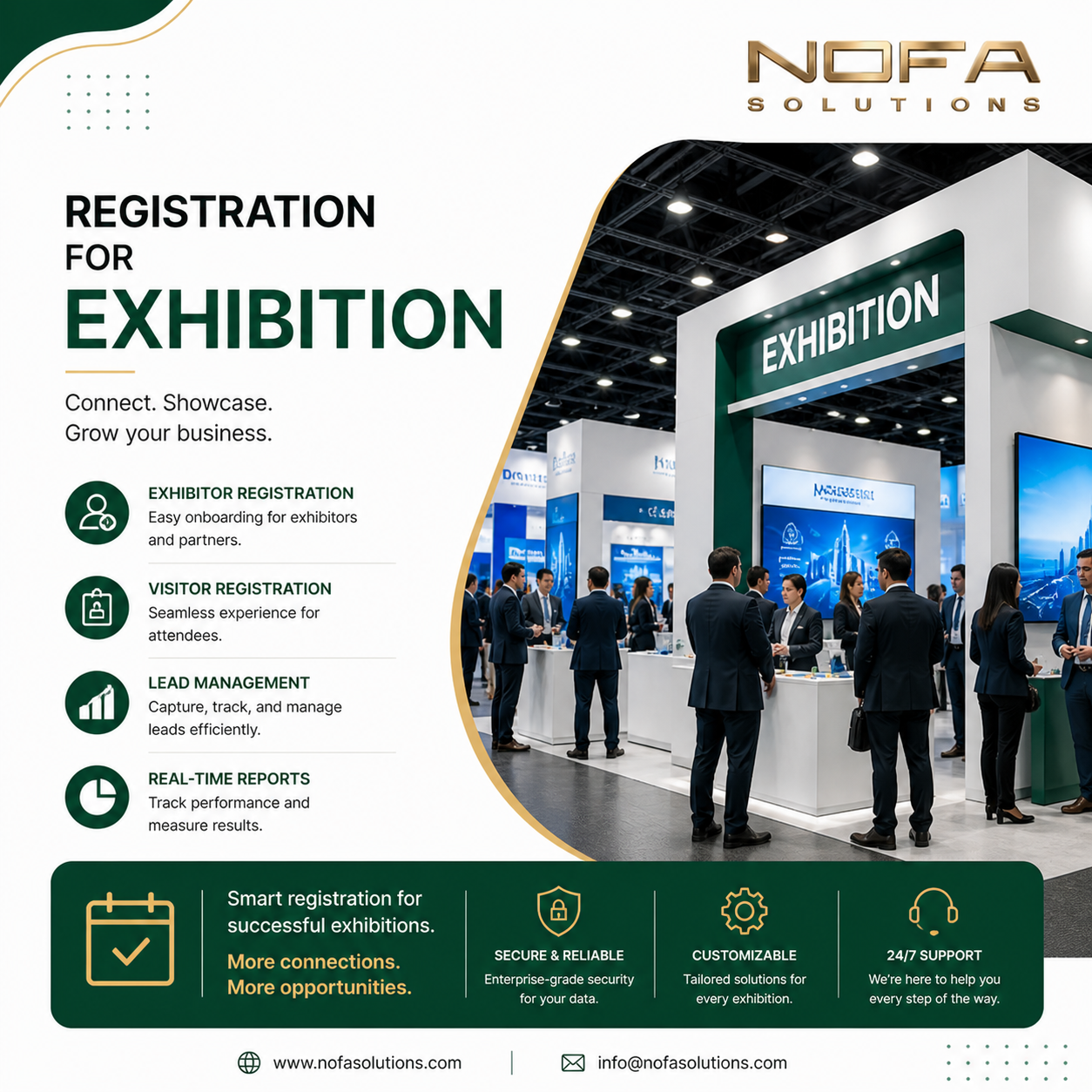
Event registration desks fail for one simple reason: queue math.
Last winter at the Riyadh Front Exhibition Center, we watched an event team learn this lesson the hard way. Doors opened at 8:00 AM. Opening remarks were scheduled for 9:00 AM sharp. Between 8:15 and 8:40 AM, twelve chartered buses and dozens of taxis dropped roughly 850 attendees at the north entrance all at once.
The organizer had set up four manual check-in counters. Behind each desk, a staff member sat with an office laptop, manually searching for names in a massive shared spreadsheet, asking for National IDs, and digging through cardboard shoeboxes filled with pre-printed plastic badges.
Let's look at the numbers.
Even if each staff member took only 45 seconds to locate a record, cross-reference spelling in both English and Arabic, and hand over a lanyard, that desk cleared roughly five people every four minutes. Across four counters, they were processing barely five attendees per minute total.
In thirty minutes, they cleared about 150 people. But 850 people had just walked through the front doors.
The math doesn't forgive. Within twenty minutes, a line of 700 executives in business suits snaked out through the security magnetometers, down the glass corridor, and onto the exterior plaza in 34°C morning heat. Attendees took out their phones, photographed the gridlock, and tagged the event sponsor on LinkedIn. Inside the auditorium, the opening keynote started forty minutes late to an auditorium that was more than half empty.
That isn't bad luck. It's an engineering failure.
The Morning Ingress Surge in Riyadh
Event arrivals in Saudi Arabia follow a distinct pattern that catches overseas event planners off guard every single season. In London or Frankfurt, delegates trickle in gradually over ninety minutes. Some arrive at 8:00 AM, some at 8:30, and others wander in past 9:15 with an espresso.
Not in Riyadh.
Morning traffic along King Fahd Road and the Northern Ring Road creates a compressed arrival spike. Attendees leave their hotels or offices early, get held up by highway bottlenecks near Exit 6, and arrive in massive, simultaneous waves thirty minutes before the opening session. If your registration infrastructure cannot absorb 600 to 1,000 arrivals within a 25-minute window, your lobby collapses.
Speed is everything. When an attendee arrives at your registration perimeter, their transaction time at the check-in point cannot exceed five seconds. Anything longer creates a cumulative queue backlog that compounds exponentially with every incoming shuttle bus.
Why Pre-Printed Badges in Alpha Boxes Fail Every Single Time
We still encounter organizers who insist on pre-printing five thousand attendee badges three days before showtime. Their production team spends forty hours stuffing plastic holders, attaching lanyards, and organizing them into alphabetical tackle boxes.
It sounds organized on paper. On-site, it's an operational disaster.
Here's what actually happens at the desk on day one:
First, fifteen percent of registered delegates simply don't show up. That means hundreds of wasted badges, pounds of discarded plastic, and wasted budget. Second, another ten percent of your attendees arrive with last-minute changes. A chief executive sends their vice president instead. A delegate changed companies last week. A surname was spelled with an 'i' instead of an 'ee' on the English side. What do your desk hosts do? They pull out a black Sharpie and scribble over a laminated executive badge. It looks cheap, unprofessional, and sloppy.
Third, and most damaging, is search latency. When five attendees with common family names arrive at the same counter, your desk staff is stuck rummaging through two different boxes looking for the right badge. That search latency adds 40 to 60 seconds per person. In event operations, 60 seconds of search delay per person turns a smooth lobby into a riot.
The solution is print-on-demand thermal badging. You don't print a badge until the attendee is physically standing at the gate. If they don't show, zero paper is wasted. If their company name changed ten minutes ago, you update the record on the screen and hit print. A fresh, crisp, perfectly centered badge prints in 2.8 seconds.
The Four-Second Check-In Architecture
To eliminate morning queues, we configure high-throughput self-service kiosks paired with dedicated industrial direct thermal printers. Here is the exact hardware setup we deploy across Riyadh summits:
Each kiosk housing integrates an industrial 2D barcode imager—specifically units like the Honeywell HF680—angled downward at 45 degrees. The optical imager reads QR codes directly off reflective smartphone glass in under 250 milliseconds, even on cracked phone screens or devices with display brightness dialed down to fifteen percent.
The scanner feeds the decoded registration hash into an on-site local micro-controller. The controller queries the local attendee index, validates the entry ticket tier, and fires raw ZPL (Zebra Programming Language) commands directly over a local TCP/IP socket to a Zebra ZD621 direct-thermal print engine running at 203 DPI.
The mechanical feed cuts and ejects a 240 GSM tear-resistant butterfly badge in 2.2 seconds. The badge stock is dual-sided and self-adhesive; the attendee pulls it from the mouth of the kiosk, folds the two halves together around their lanyard, and walks straight through the turnstiles into the exhibition hall.
Total time from phone scan to badge in hand: 3.8 seconds.
With a bank of eight self-check-in kiosks running simultaneously, your entrance processes roughly 120 delegates every single minute. An entire arrival surge of 1,000 attendees clears through the lobby in less than nine minutes. No queues, no yelling, and no frantic phone calls to the venue operations director.
Surviving Venue Wi-Fi Blackouts with Offline-First Local Servers
Here is an operational truth that software sales reps will never admit on a Zoom call: venue internet *will* fail.
It doesn't matter if the exhibition center promised dedicated fiber optic lines or redundant 5G uplinks. When three thousand attendees, six hundred exhibitors, and dozens of media crews walk into an exhibition hall with their smartphones, the local 2.4 GHz and 5 GHz radio bands saturate instantly. Cellular towers outside the venue choke on voice and data requests. If your registration system depends on an active cloud connection to validate a ticket or print a badge, your entire operation stops the microsecond the signal drops.
We saw this happen at an energy conference in Riyadh two years ago. The registration contractor brought sixty consumer tablets connected via venue Wi-Fi to a cloud database hosted in Dublin. At 8:35 AM, the venue's core network router overheated and rebooted. Every tablet froze on a spinning loading icon. For forty-five minutes, not a single human being could enter the hall. The minister's convoy had already arrived outside, and the organizers were physically shaking with panic.
We engineer against that exact single point of failure.
At every venue we service, we install a local, fanless on-premise server rack right behind the registration counters. The local server maintains a synchronized SQLite database cache containing the complete, encrypted attendee manifest. Every check-in kiosk and operator desk connects to this local server over shielded Cat6 Ethernet cabling connected to an industrial PoE switch.
If the venue fiber gets accidentally severed by a forklift loading staging equipment in the freight bay, our kiosks don't even blink. They continue scanning QR codes, checking ticket validity against the local cache, printing badges in three seconds, and tracking session headcounts. When the external internet connection restores, the local server performs an automated delta sync back to the cloud database in the background. Your front entrance never stops moving.
Arabic Typography and Saudi Cultural Protocol
Operating in Riyadh requires more than fast hardware; it demands complete fluency in regional business customs and Arabic typographical standards.
Many international registration platforms treat Arabic as an afterthought. They take an English interface, run strings through an automated translation library, and force right-to-left rendering using generic web fonts. The result on printed badges is embarrassing: disconnected Arabic letters, reversed character orders, and broken ligatures that look illiterate to native Arabic speakers.
In the Kingdom, an attendee's name and title carry substantial cultural weight. Full names frequently consist of four or five distinct patronymic elements—given name, father's name, grandfather's name, and tribal or family name. If your badge template only accommodates a sixteen-character text box designed for western names, either the family name gets truncated or the font scales down to six-point microprint that nobody can read from across a boardroom table.
Our badge formatting engines utilize native Arabic OpenType engines with automated glyph-shaping algorithms. If an executive has a long honorific or compound family name, the layout dynamically balances font leading and tracking without breaking character connectivity. Furthermore, we maintain strict bilingual separation: clear, bold Arabic script positioned prominently on top, paired with verified English transliteration directly below.
Protocol handling for VIP guests is equally vital. Major summits in Riyadh routinely host royal family members, government ministers, C-level enterprise leaders, and foreign diplomatic delegations. These dignitaries must never be directed toward public turnstile queues. We build dedicated VIP protocol reception lounges staffed by bilingual Saudi hosts who greet guests in Arabic, present custom RFID badges pre-fitted with executive lanyards, and coordinate with security details for frictionless hall access.
ZATCA Phase 2 E-Invoicing and Local Mada Gateways
If your event sells paid delegate passes, conference workshops, or exhibitor booths in Saudi Arabia, billing compliance is strictly governed by the Zakat, Tax and Customs Authority (ZATCA).
You cannot simply email an attendee an informal PDF receipt. Corporate buyers and government ministries require fully compliant Phase 2 Fatoorah electronic tax invoices. These invoices must include cryptographic stamps, seller tax identification numbers, verified sequential invoice counters, and encoded cryptographic Base64 QR codes matching ZATCA regulatory schemas.
If an enterprise delegate purchases a SAR 3,500 conference pass on-site or online, their finance department will withhold payment or demand a formal refund if the tax invoice lacks the mandatory ZATCA cryptographic clearance. Our registration backends link directly with certified ZATCA e-invoicing endpoints, generating valid tax invoices within two seconds of transaction settlement.
For on-site box office sales and late registrations, payment infrastructure must cater to local banking habits. While international visitors frequently use Visa, Mastercard, or American Express, over eighty percent of domestic Saudi transactions occur via the domestic Mada debit network or Apple Pay. Our on-site cashier desks deploy certified bank POS payment terminals with integrated contactless NFC readers, ensuring local debit cards and mobile wallets process instantly without payment gateway declines.
Mobile Lead Retrieval for Trade Show Exhibitors
For commercial trade exhibitions, registration technology directly determines exhibitor retention and satisfaction.
At legacy events, booth staff still collect paper business cards in glass bowls or scribble visitor details on notepad margins. By the third day of the exhibition, sales managers possess hundreds of wrinkled cards with illegible handwriting. It takes their administration team three weeks to manually transcribe those leads into Salesforce or HubSpot. By the time a sales rep reaches out, the prospective client has already forgotten the meeting.
We replace that friction with our proprietary mobile lead retrieval application. Exhibitors download the application directly onto their sales team's iOS or Android smartphones. When a visitor approaches their stand, the sales representative taps 'Scan' and points the phone camera at the visitor's badge QR code.
In under 300 milliseconds, the app populates the visitor's full profile: full name, verified job title, organization, country, email address, direct phone number, and purchasing authority category. The sales rep can immediately tap custom qualification tags—such as 'High Budget', 'Immediate RFP', or 'Distributor'—add voice notes or text memos, and hit save.
At the end of each exhibition day, the exhibitor exports a clean, deduplicated CSV spreadsheet or syncs leads directly into their enterprise CRM via webhook. When exhibitors generate 300 verified, qualified sales leads at your show, renewing their booth space for the following edition becomes a straightforward business decision.
Session Tracking and Crowd Capacity Management
At large-scale summits with simultaneous breakout sessions, masterclasses, and keynote halls, tracking attendee movement is essential for both security and venue logistics.
If your venue's primary auditorium holds 500 people, but your registration system sold 700 passes with access to that track, you face an immediate safety hazard when the opening session begins. Civil Defense regulations in Riyadh enforce strict hall capacity ceilings. If corridors become blocked with attendees trying to enter an over-capacity session, venue marshals will halt proceedings.
We deploy handheld laser scanners and optical access turnstiles at every hall entrance. As attendees enter, staff scan badges to track capacity counts in real time. If Room B reaches 95% capacity, our cloud dashboard flags an alert to floor coordinators, allowing them to redirect traffic to overflow video rooms before physical crowding occurs. For certified events, this scan data automatically generates CME (Continuing Medical Education) or CPD attendance certificates based on verified minutes spent inside the room.
On-the-Ground Production Crews: Why Hardware Alone Fails
You can rent the most expensive kiosks and thermal printers in the world, but if the operators running the floor don't know what they're doing, your entrance will struggle.
On event morning, unexpected friction happens constantly. An attendee drops their phone and cracks the screen, preventing scanner focus. An overseas visitor arrives without an entry visa confirmation. A printer roller picks up glue residue from cheap third-party paper stock and stops feeding. A VIP delegate arrives under an alias for personal security reasons.
When these issues arise, organizers cannot afford to wait twenty minutes for an offshore software support desk to reply to a help ticket. You need seasoned, bilingual systems engineers and desk supervisors standing on the floor with backup equipment, spare printheads, extra rolls of 240 GSM badge stock, and hot-swap replacement kiosks ready to deploy in under sixty seconds.
At NOFA Solutions, we provide end-to-end event registration infrastructure across Riyadh, Jeddah, and the wider Gulf. From online registration forms and ZATCA-compliant payment processing to self-service check-in kiosks, high-speed thermal badging, and on-site operational crews, we ensure your attendees walk through the door quickly, smoothly, and professionally.
Planning an Event in Riyadh?
Eliminate lobby queues and deploy professional self-service check-in kiosks and thermal badging. Speak with our local Riyadh operations team today.
Talk to Our Riyadh Team